There’s something intimate about stepping into a new city not through the polished doors of a hotel transfer van, but through its bus stops, tram lines, and station platforms. That’s exactly how I met Cottbus—not as a guest, but as a temporary local.
Situated in the state of Brandenburg, not far from the Polish border, Cottbus isn’t the kind of place that screams for attention. It whispers. It invites. And once you’re in, you find a rhythm that’s entirely its own. Small, green, and rich in regional history, this city charmed me from the moment I stepped off the train. But it wasn’t until I boarded my first Cottbusverkehr tram, ticket in hand and curiosity at full throttle, that I realized: public transportation here isn’t just a way to get around. It’s part of the city’s soul.
A First Encounter: Cottbus at Tram Speed
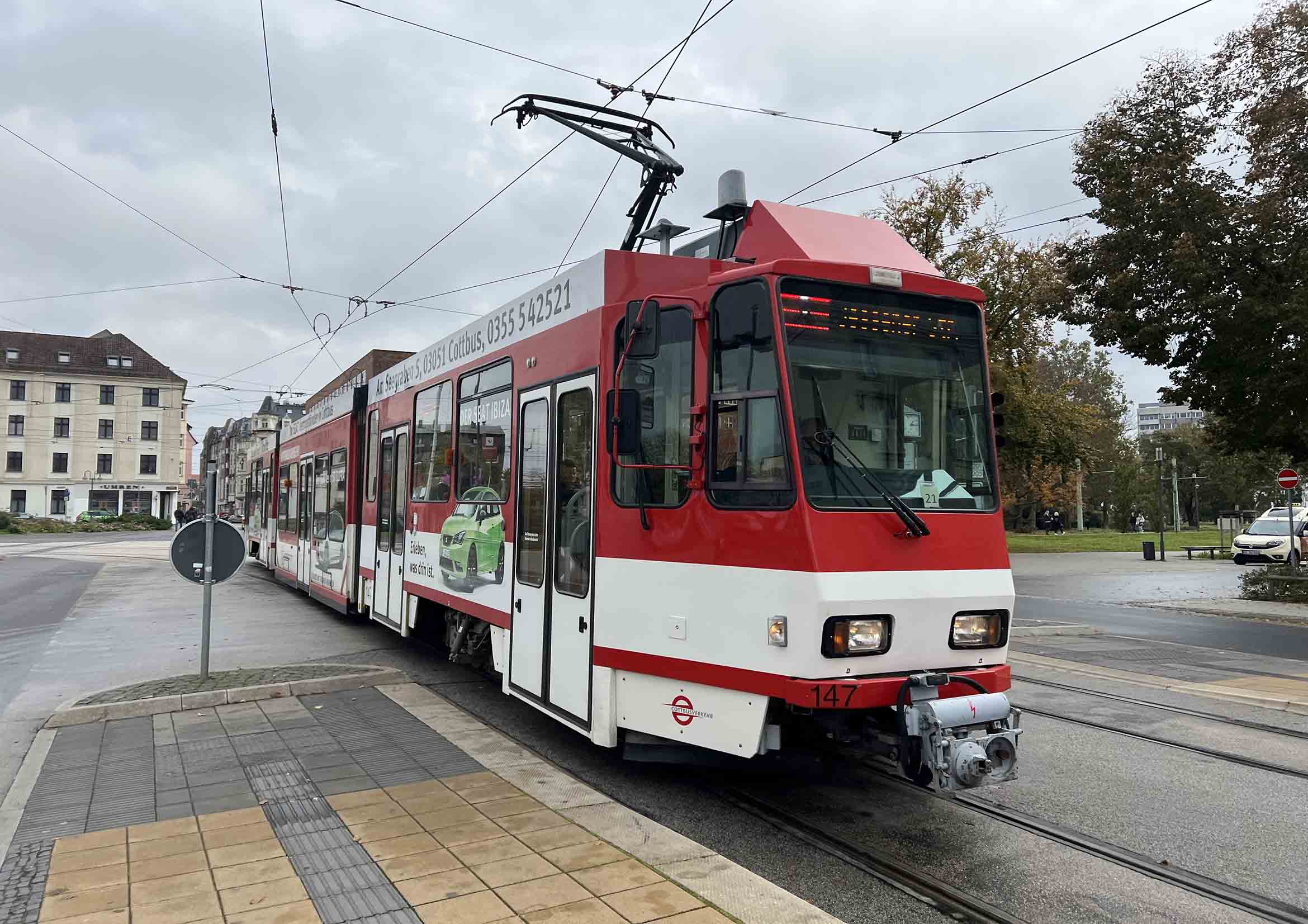
My first ride was on Line 1, heading toward Schmellwitz Anger. I boarded at Stadthalle, just outside the Altmarkt. It was mid-morning on a weekday. Locals were heading to work or university, elderly women carried market bags, and I was the only one with a camera slung over my shoulder. It felt honest, unfiltered, and I loved every second of it.
The trams in Cottbus aren’t flashy, but they’re remarkably clean, punctual, and well-connected. And the best part? They run through the heart of daily life. You see gardens, bookstores, corner bakeries, university students, families on bikes—all within 15 minutes of gliding quietly on steel rails. It’s a mobile postcard of the city.
Unlike Berlin or Munich, where public transport is utilitarian and often impersonal, Cottbus’s system felt personal. I ended up chatting with a young student who was writing his thesis on Lusatian Sorbian culture, and he pointed out places to visit along the line that I never would’ve discovered on Google Maps.
Why Public Transport in Cottbus Matters
In a place where tourism isn’t built for volume, but for depth, the tram, bus, and regional train network opens up neighborhoods, parks, and pockets of culture that would otherwise be skipped. Riding local allows you to:
- Skip the hassle of car rentals
- Travel affordably (day passes are excellent value)
- Be spontaneous—just hop off where it looks interesting
- Observe daily life without filters or curation
I visited museums, parks, even a traditional bakery in Ströbitz, all thanks to a tram line and a bus transfer.
10 Travel Tips for Experiencing Cottbus Through Public Transportation
If this is your first visit to Cottbus, and you want to explore like a local (without the stress), here are ten practical, experience-based tips that will make your transport experience both smooth and enriching:
1. Download the “VBB Bus & Bahn” App Before You Arrive
The VBB (Verkehrsverbund Berlin-Brandenburg) app is your ultimate navigation tool in Cottbus. It gives real-time timetables, route maps, and allows mobile ticket purchases. You can even plan connections between Cottbus and nearby towns like Lübbenau or Burg (Spreewald).
Pro Tip: Activate your ticket before stepping on the tram or bus. Conductors do random checks.
2. Choose the Day Pass if You’re Exploring All Day
Cottbus is compact, but if you’re planning to explore parks, the university area, or even take a short trip to Branitz or Spreewald, a Tageskarte (day ticket) is the best deal. It’s valid across trams and buses for the entire day.
Cost: Around €6.80
Where to Buy: Ticket machines, the VBB app, or directly on board (some buses).
3. Get to Know the Three Main Tram Lines
There are three main tram lines:
- Line 1: Schmellwitz – Madlow
- Line 2: Sandow – Sachsendorf
- Line 4: Neu Schmellwitz – Ströbitz
These lines cover most tourist spots including the Altmarkt, Staatstheater Cottbus, Branitzer Park, and residential neighborhoods worth exploring. Every local has a favorite tram line—and mine quickly became Line 2, for its contrast between urban life and quiet corners.
4. Mornings Are for Locals. Afternoons Are Yours.
If you want to experience the city waking up, hop on a tram between 7:00 and 9:00 AM. It’s mostly locals commuting, and the quiet focus of the morning is oddly peaceful. But if you want to wander or take photos without feeling intrusive, go after 11:00 AM. The pace softens, and the city seems to open up.
5. Cottbus Bus Routes Reach Hidden Gems
While trams are the backbone, buses reach areas beyond the city center. I took Bus 16 to reach the Cottbuser Ostsee—a lake under regeneration on a former coal mining site. It’s a surreal, beautiful transition zone where industry meets nature. The bus ride itself was a visual journey through suburban streets, forests, and development zones.
6. The Hauptbahnhof Is More Than a Station
Cottbus’s central train station is also the city’s main public transport hub. Regional trains, trams, and buses converge here. It’s where I first felt that quiet excitement of potential: which direction today? The station has good signage, a cozy bakery, and plenty of spots to wait, plan, or just watch the city move.
7. Always Validate Paper Tickets
If you buy a ticket from a machine (and not via the app), remember to validate it in the yellow or red box onboard or on the platform. Unvalidated tickets can lead to fines, even if you just forgot. I saw it happen to a tourist couple and trust me—it’s not the kind of local experience you want.
8. Sunday Service Is Real but Less Frequent
Cottbus slows down on Sundays. Trams and buses still run, but on reduced schedules. Check the VBB app for real-time updates, especially if you have plans to visit outskirts like Branitz or take a regional train to Spreewald.
9. Public Transport Runs on Trust (and Checks)
Most public transport in Germany works on the honor system—no turnstiles, no gates. But don’t mistake this for laxness. Ticket checks are random but serious. I was checked twice in three days, both by plainclothes inspectors.
10. Don’t Rush—Wander
Cottbus isn’t about speed. It’s a city made for slow travel, and public transport supports that. On my last day, I rode a tram just to watch the city glide past one last time. I got off where it felt right, walked through a leafy neighborhood, and stumbled into a local café that served the best Apfelstrudel I’d ever had.
Where to Book the Rest of Your Cottbus Journey
To round out your experience, here are trusted European platforms I’ve personally used and recommend for planning the rest of your Cottbus (or broader Germany) adventure:
- Omio – for trains, buses, and flights across Germany and Europe
- Booking.com – for a full range of accommodations, from boutique guesthouses in Cottbus to countryside hotels near the Spreewald
- GetYourGuide – to book guided tours in Brandenburg, including Spreewald canoe trips and Branitzer Park tours
- Skyscanner – for affordable, flexible flight planning to Berlin
- TheFork – to find and reserve great local restaurants (I found a gem near Altmarkt through this!)
The Final Stop Wasn’t a Place—It Was a Feeling
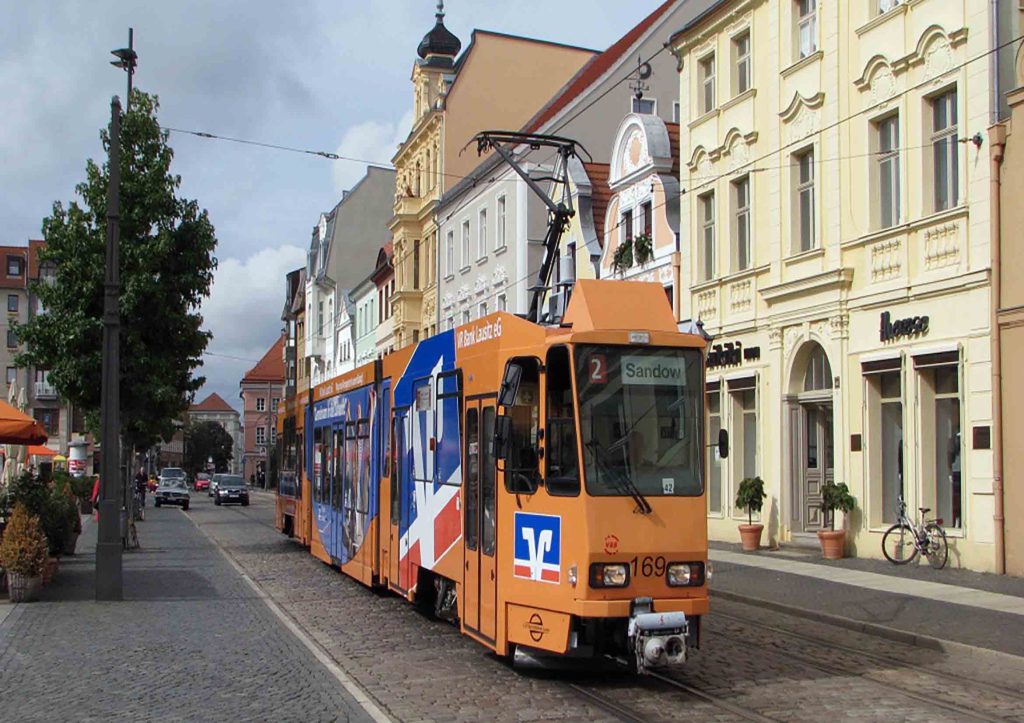
On my last morning in Cottbus, I stepped onto Tram Line 2 one final time. It was early—mist still lingered above the rooftops, and the city was quiet, as if deciding whether to fully wake up or keep dreaming. The tram doors opened with that familiar hydraulic sigh, and I sat near the window, watching familiar scenes pass me by: the faded brick façades of old townhouses, the tidy schoolyards, a man walking his dog near Puschkinpark, the reflection of early sunlight on shop windows.
I wasn’t in a hurry. That’s the beauty of Cottbus public transport—it respects your time but never pushes you. It lets you linger.
Somewhere between Thiemstraße and Sandow, I realized I wasn’t just observing the city anymore—I was participating in it. I had learned to read the rhythm of its timetables, to expect the conductor’s nod, to smile at familiar passengers. For a few days, I was part of the city’s daily choreography. Not just a tourist, but a quiet presence in its movement.
I stepped off at a stop I hadn’t planned, wandered into a neighborhood I hadn’t researched, and found a small café filled with locals. I ordered a coffee and a slice of Mohnkuchen (poppyseed cake), sat by the window, and watched a tram disappear around the corner. I didn’t take a photo. I didn’t check my phone. I just… stayed. And that moment felt more honest, more real, than anything I’d expected to find when I booked my train to Brandenburg weeks ago.
That’s what public transport in Cottbus gave me: freedom to explore, space to observe, and the gentle, unexpected joy of slowing down.
If you ever come to this understated corner of Germany—don’t rent a car. Don’t rush between landmarks. Just take the tram. Let it show you what the locals already know: that Cottbus isn’t meant to impress you in a single glance. It’s meant to grow on you, one quiet ride at a time.
And that’s the kind of travel that stays with you long after the ticket expires.